

5 signs of separation-related distress in dogs
Separation-related distress means a dog becomes distressed around or during an owner's absence. Barking, pacing, chewing, or house soiling alone cannot diagnose it. The most useful next step is to record what happens after you leave, note the timing and behaviors, and speak with your veterinarian when distress is persistent or severe.
By Tail & Treat Editorial Team · Published Jul 13, 2026 · Updated Aug 2, 2026
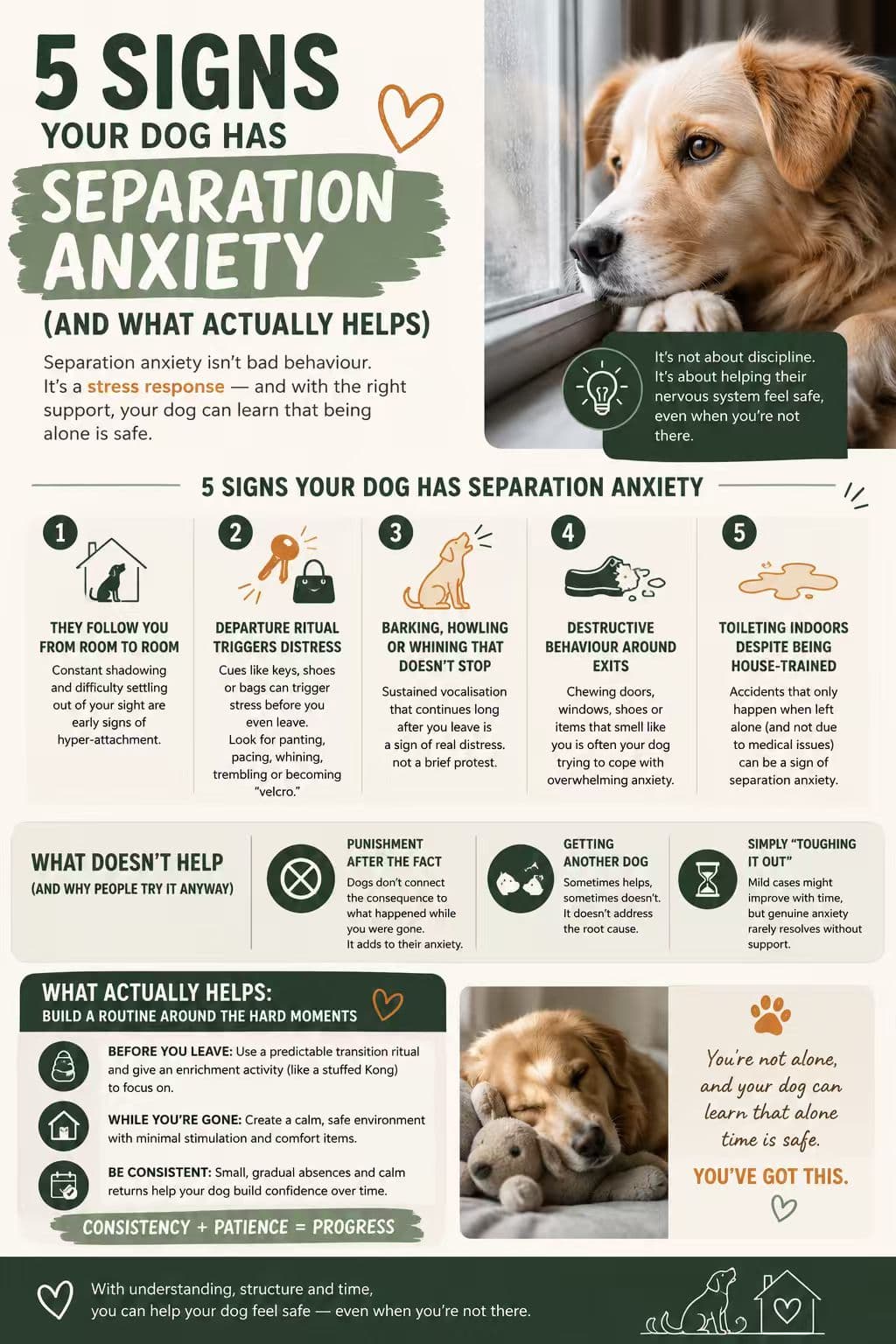
What separation-related distress means
This term describes a pattern of distress connected to separation from a caregiver or being alone. A diagnosis needs more than one behavior: veterinary guidance emphasizes ruling out other explanations, such as incomplete house training, external triggers, noise aversion, confinement anxiety, exploratory play, or medical factors.
The Merck Veterinary Manual's behavior guidance notes that a home video can be especially useful for distinguishing separation-related distress from other problems that happen when an owner is away.
Five patterns owners may notice
These patterns are observations to record, not a checklist that confirms a diagnosis.
Distress around departure cues
Some dogs react when they see keys, shoes, bags, or another familiar departure cue. This can be meaningful when it appears together with distress during an absence.
Vocalizing soon after you leave
Barking, whining, or howling that is persistent and tied to being alone can be one pattern to record. It can also have environmental causes, such as outside sounds.
Pacing, panting, or inability to settle
Restlessness, scanning, panting, lip licking, and repetitive pacing on a home camera can be useful observations to share with a professional.
Destruction or escape attempts
Damage near exits, frantic attempts to get out, or self-injury need prompt professional advice. Destructive behavior can also stem from other causes.
House soiling only during absences
A previously house-trained dog soiling only when left alone may be showing distress, but medical and training causes need to be considered too.
How to use a camera to observe the first part of an absence
Set up a phone, pet camera, or other safe recording method before you leave. The American Veterinary Society of Animal Behavior recommends recording the first 30 to 60 minutes, because many affected dogs show distress early in an absence.
Note the departure time, when each behavior begins, what happened just before it, whether your dog can settle, and whether they take food. Save a short example to discuss with your veterinarian. Do not create a longer or more difficult absence merely to collect footage.
Separation distress versus boredom or another issue
A dog may chew, bark, or pace for many reasons. Following an owner from room to room is not proof of separation anxiety by itself. The timing and full pattern matter: does the behavior happen around departures, only while alone, or in response to a sound, confinement, pain, or a change in routine?
If your dog simply loses interest in familiar toys, try a smaller active set and observe what they choose. Our toy-rotation guide explains a safe, practical way to do that without treating toy choice as a diagnosis.
What not to do
Do not punish behavior that happened while you were away. Do not assume another pet, a crate, a new toy, or a more rigid routine will solve the problem. Crates can work well for some dogs and add distress for others; use observation and professional advice to decide what is appropriate.
Where enrichment may fit, and where it does not
Some dogs safely enjoy a food-filled toy or prepared lick mat as one predictable part of a departure routine. Introduce it while supervised, make sure it suits the dog's chewing style, and use dog-safe ingredients in an amount that fits their daily food plan.
The ASPCA's separation-anxiety guidance cautions that highly anxious dogs often will not eat when left alone. Enrichment can support a dog who safely engages with it; it does not diagnose, cure, or replace a professional plan for separation-related distress.
What owners can do next
- Record a typical absence and write down the timing and behaviors you see.
- Prioritize safety. Seek prompt help for escape attempts, self-injury risk, or severe distress.
- Share the video and notes with your veterinarian; ask about a qualified behavior professional if needed.
- For dogs who safely engage with enrichment, build a calm, repeatable before-you-leave routine alongside professional guidance.
Frequently asked questions
Does following me around prove my dog has separation anxiety?
No. Following an owner from room to room can be normal social behavior or a personal preference. It matters more when it appears alongside clear distress around departures or during absences.
Can a lick mat or food toy solve separation anxiety?
No. Some dogs safely enjoy a prepared food item as part of an alone-time routine, but dogs in substantial distress may not eat when alone. It is not a treatment replacement for professional assessment and a behavior plan.
When should I contact a veterinarian?
Contact a veterinarian promptly for persistent or severe distress, sudden behavior changes, self-injury risk, escape attempts, or anything that makes you concerned for your dog’s welfare. Bring notes and video when possible.
Sources and further reading
Educational information only. This guide cannot diagnose separation anxiety or another behavior condition. Speak with a veterinarian or qualified behavior professional about persistent, severe, sudden, or unsafe behavior.