

How to choose a dog bed
Start with how your dog actually rests, then compare usable space, access, material, cleaning, temperature, and the room where the bed will go.
By Tail & Treat Editorial Team · Published Sep 17, 2026 · Updated Sep 17, 2026
1. Watch the sleeping position
Observe your dog over several rest periods. Do they curl tightly, stretch from nose to tail, lie flat on one side, rest their head on an edge, or move between positions?
The RSPCA dog-bed guide notes that round or oval beds with sides may suit curling, while mattress-style beds provide room to lie flat. A product shape should follow the dog's pattern rather than determine it.
2. Measure for usable space
Measure your dog while they are resting in their longest common position. Then compare that measurement with the bed's usable sleeping surface, not only its outside dimensions. Thick bolsters and walls can reduce the space available inside.
A supplier weight range can be a starting point, but dogs of the same weight may have very different body lengths and sleeping positions.
3. Check entry height and access
Look at how the dog steps into and out of the bed. A tall wall or deep cave may not fit a dog that prefers an open surface or has difficulty stepping over an edge.
For senior dogs, the American Veterinary Medical Association notes that environmental changes may include easier sleeping areas and nonslip surfaces. Ask a veterinarian for individual guidance when pain, stiffness, weakness, or reduced mobility is involved.
4. Match material and temperature
Consider where the bed will be used and how warm the room becomes. Enclosed and plush beds retain a different amount of warmth than open or flatter surfaces. A dog may also switch surfaces across seasons.
Check the exact care label before buying. The RSPCA recommends comfortable material and easy cleaning; removable covers or washable components can make routine maintenance more practical.
5. Plan the location before ordering
The RSPCA recommends a comfortable, dry, draught-free, clean, and quiet resting place. Measure the intended floor area and make sure the bed will not block a walkway, door, heater, or household exit.
Read Where Should You Put a Dog Bed? for room-by-room considerations.
Looking for a simple open resting spot?
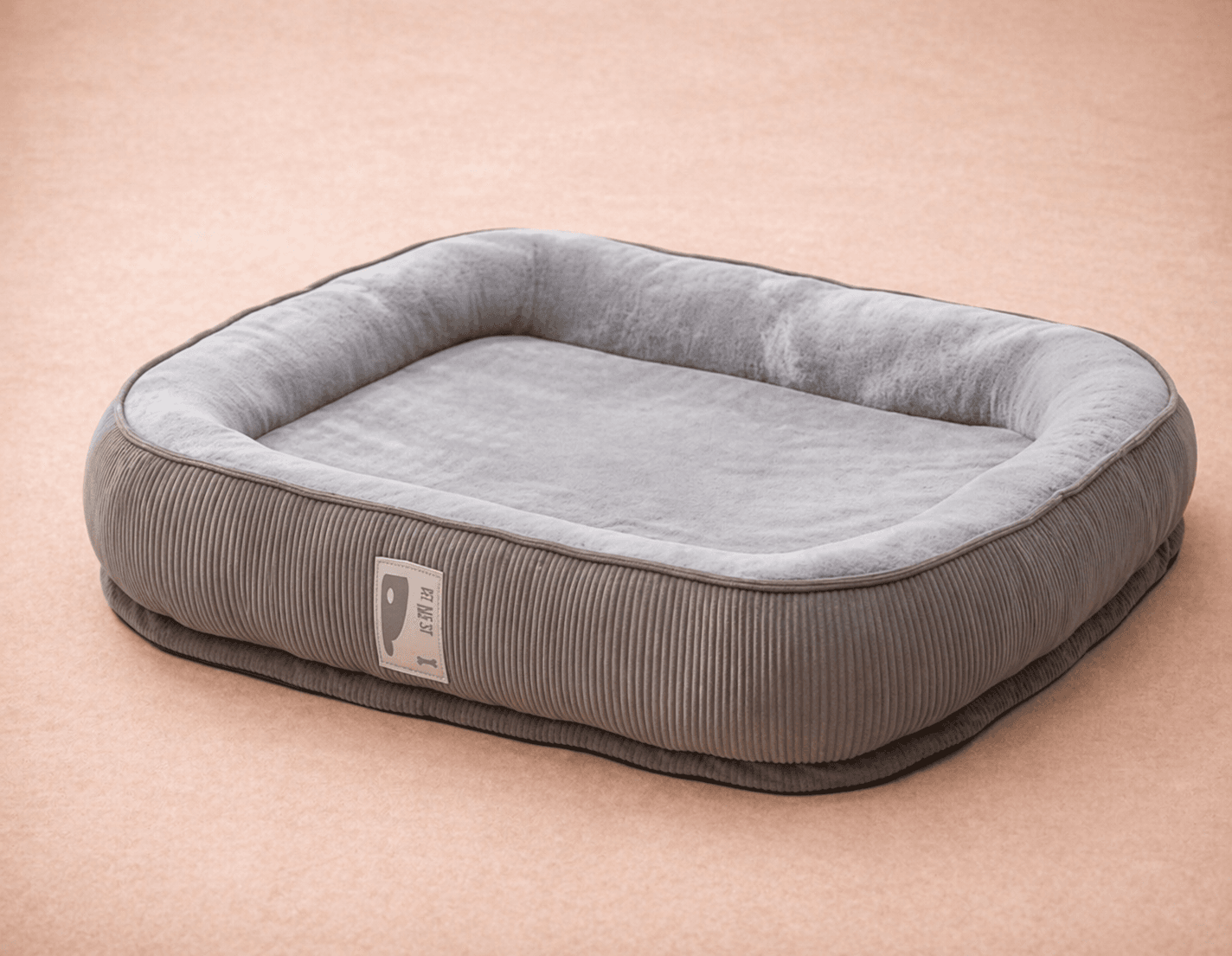
The Corduroy Bolster Lounge Bed is the open-bed starting point in the Tail & Treat Wind Down collection. It has four listed sizes, a rectangular sleeping surface, and a raised edge around all four sides.
Compare the listed dimensions with your dog's resting measurement before ordering. The product is not presented as an orthopedic or medical bed.
Sources and further reading
Educational information only. Ask a veterinarian for help selecting a resting surface for a dog with pain, injury, impaired mobility, pressure sores, or another medical need.