

How to introduce a puzzle toy to your dog
Make the first puzzle easier than you think it needs to be. Let your dog see where the food goes, expose one simple solution, and help only enough for them to understand how their movement produces the reward.
By Tail & Treat Editorial Team · Published Aug 26, 2026 · Updated Aug 26, 2026
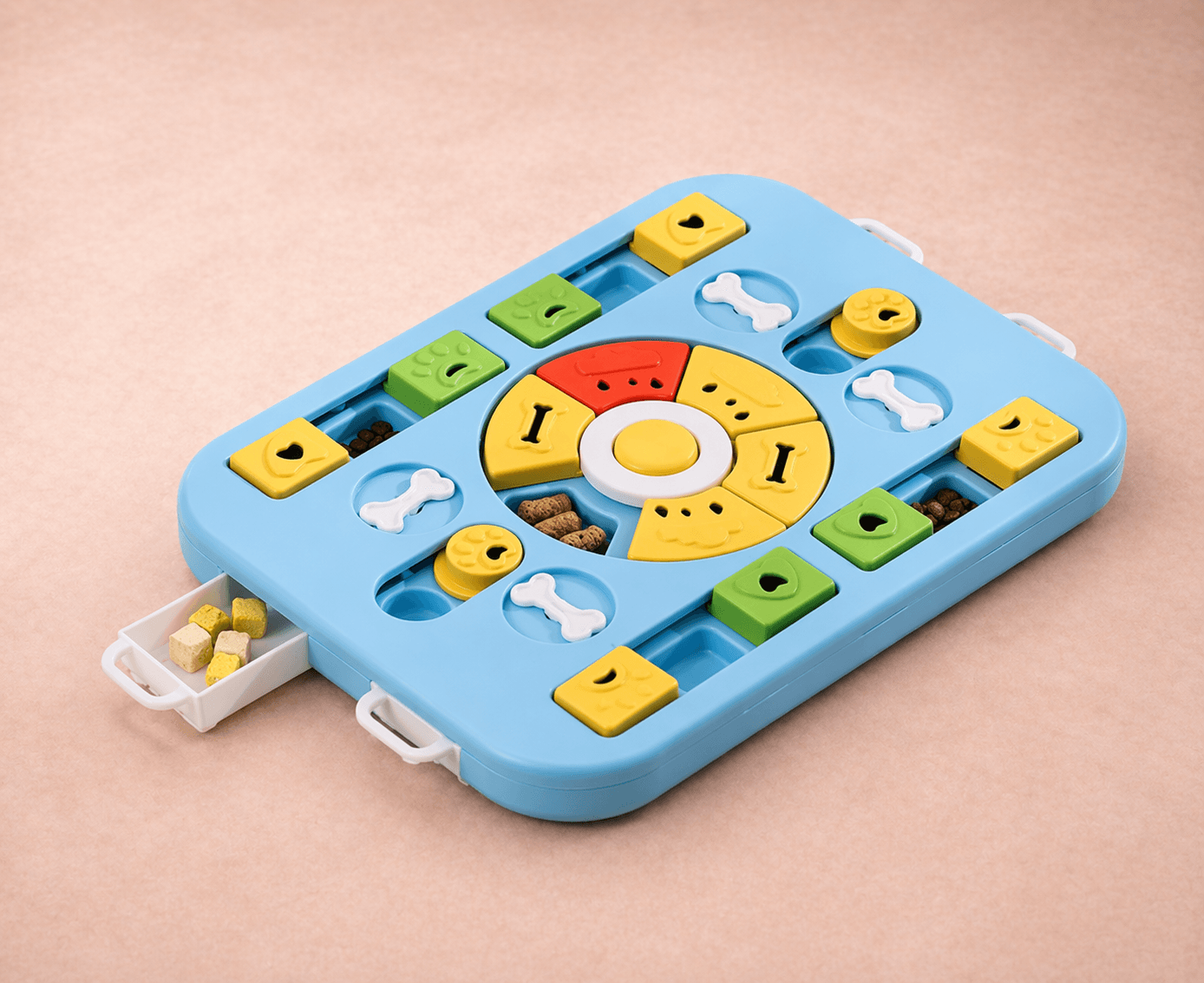
What a puzzle toy is for
A food puzzle asks a dog to sniff, nose, paw, slide, lift, or rotate part of an object to reach food. It can turn part of a normal meal into a short problem-solving activity, but it should complement movement, rest, training, and time with people rather than replace them.
The Ohio State Veterinary Medical Center's puzzle-toy guidance recommends matching the toy and difficulty to the individual pet, closely supervising a new product, and watching for frustration, stress, guarding, damage, or attempts to ingest pieces.
Set up the first session
- Choose a quiet, supervised moment. Use the puzzle where it will not slide into hazards and separate dogs if food or toy guarding is a concern.
- Use familiar food. Start with a small part of your dog's regular meal or food already known to suit them.
- Leave the solution partly open. Put food in one or two easy locations instead of filling every compartment.
- Demonstrate once. Let your dog watch you move one piece or reveal one reward, then give them room to try.
- Stop before frustration. Make the puzzle easier if your dog scratches wildly, bites the object, walks away repeatedly, or cannot settle into the task.
Increase difficulty gradually
Progress can mean closing one more compartment, adding a second movement, or using a puzzle with more possible actions. It does not have to mean making every session difficult. A familiar easy setup can still be useful on a busy day.
AAHA describes puzzle toys as cognitive enrichment, while UC Davis advises choosing the correct size and removing worn or broken toys. Observe your dog's response instead of relying only on a marketed difficulty label, and avoid activities that create frustration or fear.
Choose the puzzle style that fits the learner
Interactive Puzzle
An ABS plastic puzzle available as a board or disc. Begin with one visible compartment before asking your dog to slide, rotate, or open several sections.
Felt Puzzle Maze
A felt maze on a cardboard base, available in round and square shapes. Start with food near an easy opening and supervise dogs who tear or ingest fabric or cardboard.
Multi-Layer Puzzle Disc
An ABS plastic disc with rotating sections, covered compartments, and several possible movements. Introduce fewer available compartments before using the full layout.
What if your dog prefers novelty to a food puzzle?
Some dogs would rather carry, shake, chase, or investigate a different texture. The Blind Box Enrichment Toy comes from a rotating collection of rubber, plastic, or plush items, so it is a novelty option rather than a guaranteed puzzle. Introduce whichever item arrives under supervision and use the toy-rotation guide to decide whether it belongs in the active set.
Food and safety checks
- Count puzzle food as part of the dog's normal daily intake rather than an automatic extra snack.
- Use only food that is appropriate for your dog's diet and health.
- Inspect hard surfaces, moving parts, fabric, and cardboard before and after use.
- Remove a puzzle if the dog chews off pieces, develops sharp edges, or tries to swallow the material.
- Ask a veterinarian about pain, dietary restrictions, sudden reluctance to eat, or swallowed material.
Sources and further reading
Educational information only. Choose food and puzzle activities around your dog's size, diet, health, behavior, and chewing style. Contact a veterinarian about pain, dietary questions, or swallowed material.