

How to use treat toys for dog enrichment
Treat toys turn part of a reward or meal into a small activity. The goal is not to make food difficult; it is to give your dog an appropriate way to nudge, paw, roll, and work for a portion of what they already enjoy.
By Tail & Treat Editorial Team · Published Aug 23, 2026 · Updated Aug 23, 2026
What treat toys add to a routine
Food puzzles and treat-dispensing toys create a different way to eat or receive a reward. Veterinary nutrition guidance from VCA Animal Hospitals describes food-based enrichment as a way to support foraging, mental engagement, and natural food-seeking behavior.
That makes a treat toy useful for a focused indoor moment, a reward-based activity, or a small change to part of a meal. It is enrichment, not a replacement for movement, rest, attention, or a complete feeding plan.
How to introduce a treat toy
- Start with a few pieces of your dog's regular kibble or small dry treats.
- Place the toy on a stable, non-slip surface where your dog can move around it.
- Let your dog investigate before showing them how movement releases food.
- Keep the first session easy enough that your dog can succeed without becoming frustrated.
- End the activity when the rewards are gone, then wash and store the toy according to its care instructions.
VCA's activity-toy guidance recommends choosing an appropriate size and difficulty, supervising new toys, and helping a dog learn how movement releases the food when needed.
Use food thoughtfully
Whenever possible, use part of your dog's normal daily food allowance instead of treating enrichment as extra food. VCA specifically suggests using part of a regular meal in a food puzzle and checking treat choices with your veterinarian when dietary needs are specific.
If you use commercial treats, check the label and keep the amount appropriate for your dog. Stop if the toy causes guarding, distress, or a digestive problem, and ask your veterinarian about diet-sensitive dogs.
Where the Avocado Treat Tumbler fits
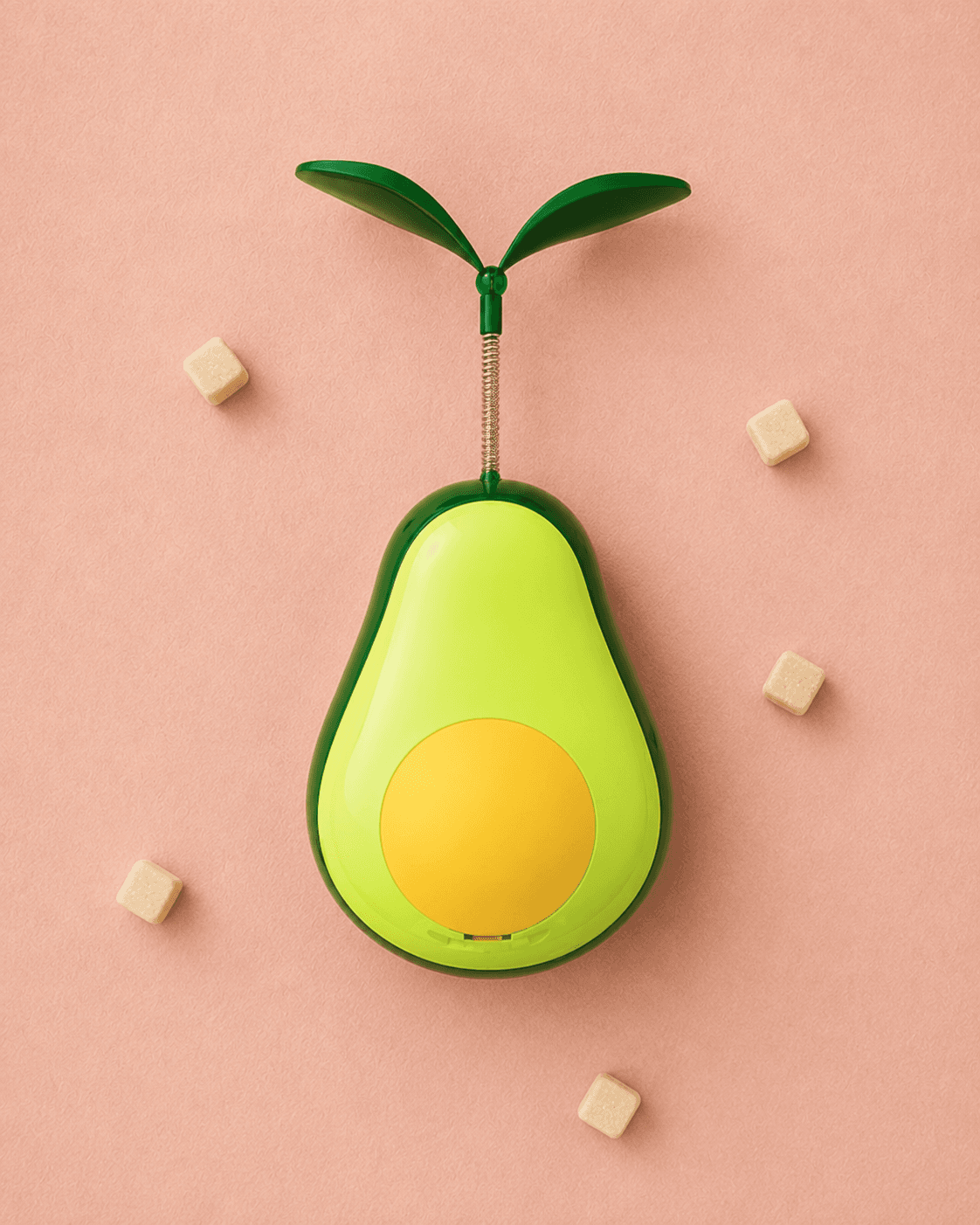
The Avocado Treat Tumbler is a one-size, $19.99 treat-dispensing toy made from ABS plastic. Its rounded base wobbles as a dog nudges, paws, or rolls it to release small dry treats or kibble.
It is a good fit when you want a short, focused indoor activity. For a broader weekday structure, use the Tail & Treat Routine Planner and choose play as the part of the day that needs more structure.
Know when to pause
Supervise a new treat toy and inspect it regularly. AAHA's enrichment guidance recommends choosing an appropriately sized toy, supervising new enrichment items, and discarding anything damaged enough to create a swallowing hazard.
Pause the activity if your dog tries to chew pieces off, becomes frustrated, guards the toy, or loses interest. A simpler activity or a different enrichment type may be a better fit.
Sources and further reading
Educational information only. Choose food, treat amounts, and enrichment activities based on your dog's size, health, diet, and behavior. Contact a veterinarian about dietary restrictions, swallowed material, or sudden behavior changes.