

Lick mat vs slow feeder: which fits your dog's routine?
A slow feeder is usually the clearer starting point for pacing a regular kibble meal. A lick mat is usually better suited to a small amount of spreadable food offered as a supervised, quieter activity.
By Tail & Treat Editorial Team · Published Oct 6, 2026 · Updated Oct 6, 2026
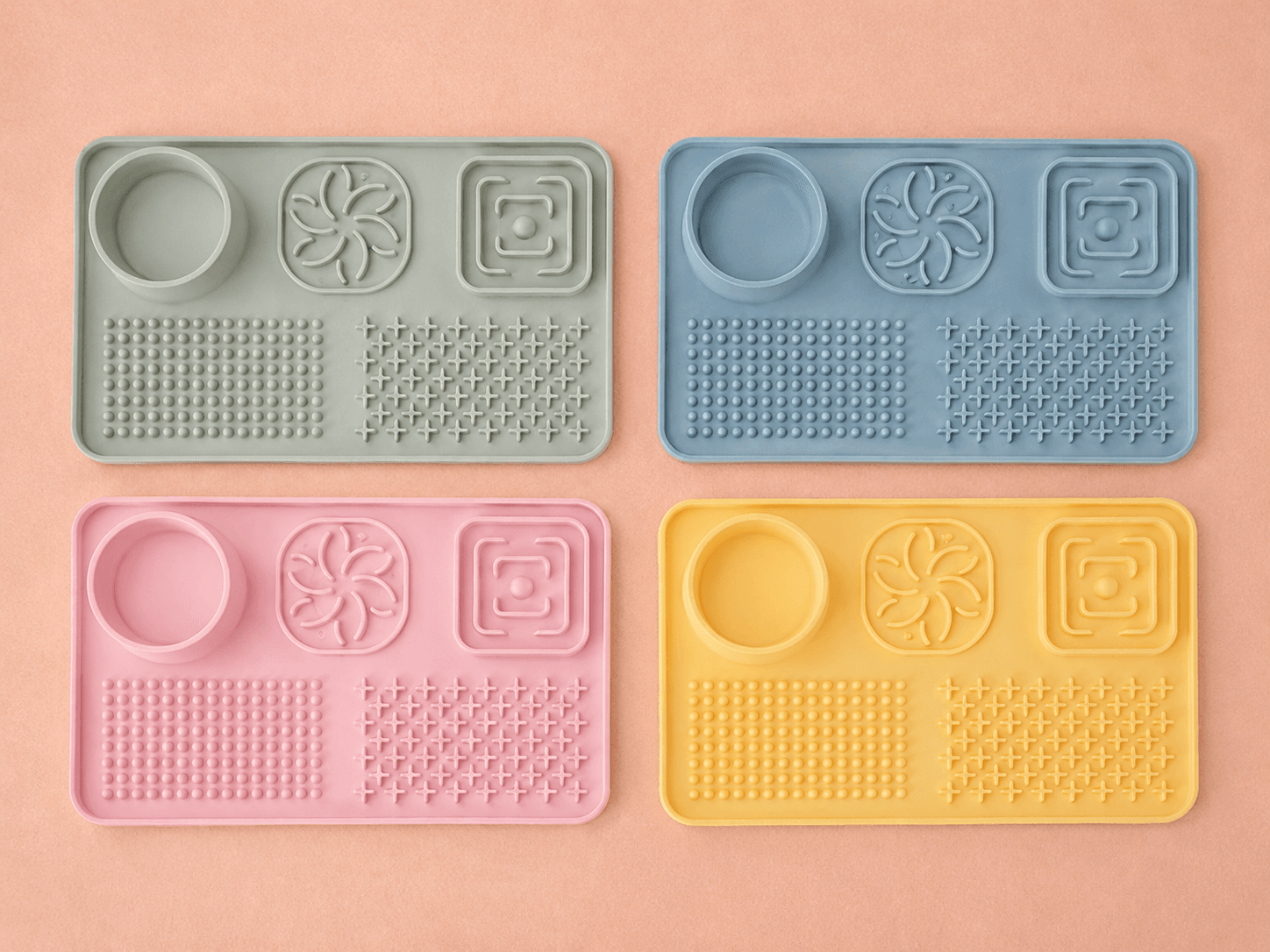

Choose based on the job, not the trend.
- Choose a slow feeder when your main goal is changing the pace of a dry meal.
- Choose a lick mat when you want a supervised food activity using a thin layer of spreadable food.
- Use neither when the setup causes chewing, frustration, guarding, repeated vomiting, or another safety concern.
What is the practical difference?
A slow feeder changes access to food by placing raised sections inside a bowl. The dog eats around those sections instead of taking unobstructed mouthfuls from an open bowl. It is primarily a mealtime tool.
A lick mat holds soft food across a textured surface. It asks the dog to work across the mat with their tongue, so it functions more like a short food-based activity than a conventional bowl.
VCA Animal Hospitals explains that food puzzles can slow eating while keeping a pet mentally engaged. AAHA's enrichment guidance similarly describes food enrichment as a way to slow some fast eaters and offer a focused activity. Neither source suggests that one feeding tool is universally best.
Lick mat vs slow feeder at a glance
| Question | Lick mat | Slow feeder |
|---|---|---|
| Primary use | Short food-based activity | Pacing a regular meal |
| Food format | Thin layer of suitable soft food | Usually kibble or dry food that fits the bowl |
| Routine moment | Quiet time or another supervised transition | Breakfast, dinner, or a measured feeding |
| Main watch-out | Chewing the mat or swallowing damaged material | Frustration, tipping, or a pattern that is too difficult |
When a slow feeder makes more sense
Start with a slow feeder when your dog finishes a normal kibble meal very quickly and your veterinarian has not identified an underlying medical issue. The setup should make the meal more deliberate without making food inaccessible.
Begin with the normal measured meal, place the feeder on a stable surface, and observe the first several uses. If your dog paws, flips, bites, or abandons the bowl, the pattern may be too difficult or the design may not suit that dog.
Read our full guide to helping a dog eat more slowly before treating fast eating as a product-only problem.
When a lick mat makes more sense
Choose a lick mat when the food format is soft and the goal is a short, supervised activity rather than serving a full dry meal. Use part of the dog's normal food allowance when practical and account for anything additional.
The first session should happen while you are home. Remove the mat if your dog tries to chew the silicone or tear pieces away. For preparation, frequency, and food considerations, start with what a lick mat is and how to use one.
Can a dog use both?
Yes, when each tool has a distinct purpose. A slow feeder might hold breakfast, while a lick mat might use a small reserved portion during a supervised quiet period later in the day. They do not need to appear in every routine or on the same day.
The food still counts toward the dog's total intake. VCA recommends considering regular food for enrichment and discussing ingredients and calorie needs with a veterinarian when dietary needs are specific.
Use the Daily Dog Routine Planner to decide where a feeding or enrichment activity actually fits before adding another recurring task.
Safety and supervision
- Supervise the first uses and remove any item your dog tries to break or swallow.
- Choose food that fits your dog's normal diet, allergies, and veterinary guidance.
- Wash the tool after use and inspect it before the next session.
- Feed dogs separately when food guarding or competition is a concern.
- Contact a veterinarian about sudden appetite changes, repeated vomiting, weight loss, abdominal swelling, distress, or difficulty eating.
The ASPCA's canine enrichment guidance emphasizes active supervision and removing enrichment materials when a dog attempts to ingest them.
Where the Tail & Treat options differ
The Tail & Treat Lick Mat is silicone, has a textured surface, and is intended for prepared, supervised food enrichment. Its listed size is 12 x 3 x 1 inches, with sections up to 2 inches deep.
The Eggshell Slow Feeder is food-grade plastic with a raised eggshell-pattern surface. It is intended for kibble or dry treats during meals or measured reward-feeding sessions.
Those differences matter more than choosing whichever product sounds more enriching. Start with the routine problem you are actually trying to solve.
Sources and further reading
Educational information only. This guide does not diagnose or treat feeding, digestive, or behavioral conditions. Ask a veterinarian about persistent fast eating, dietary restrictions, or sudden changes in appetite or behavior.