

What to give someone who lost a dog
The most thoughtful gift usually begins with recognition: their dog mattered, the relationship was personal, and there is no deadline for feeling the loss.
By Tail & Treat Editorial Team · Published Sep 18, 2026 · Updated Sep 18, 2026
Start by acknowledging the loss
You do not need to find the perfect object or the perfect sentence. Use the dog's name when you know it, mention one specific memory, and let the person decide whether they want to talk.
Cornell University's pet-loss guidance explains that people respond differently to loss and that grief does not follow one prescribed timeline. A gift should make room for that difference instead of trying to move someone past it.
Five thoughtful pet memorial gift ideas
- A note with one real memory. Write down something you remember about the dog: a greeting, a habit, a favorite place, or a moment that made you laugh.
- A printed photograph. Choose a clear photo that reflects the dog's personality. Add the date or a short story on a separate card rather than writing on the original image.
- A simple memory-box starter. Give an empty box, a few labeled envelopes, and note cards so the recipient can decide what belongs inside. Our dog memory-box guide offers a gentle structure.
- A donation in the dog's name. Choose a shelter, rescue, veterinary program, or other cause that mattered to the person. Ohio State's pet memorial program is one example of remembrance through a contribution.
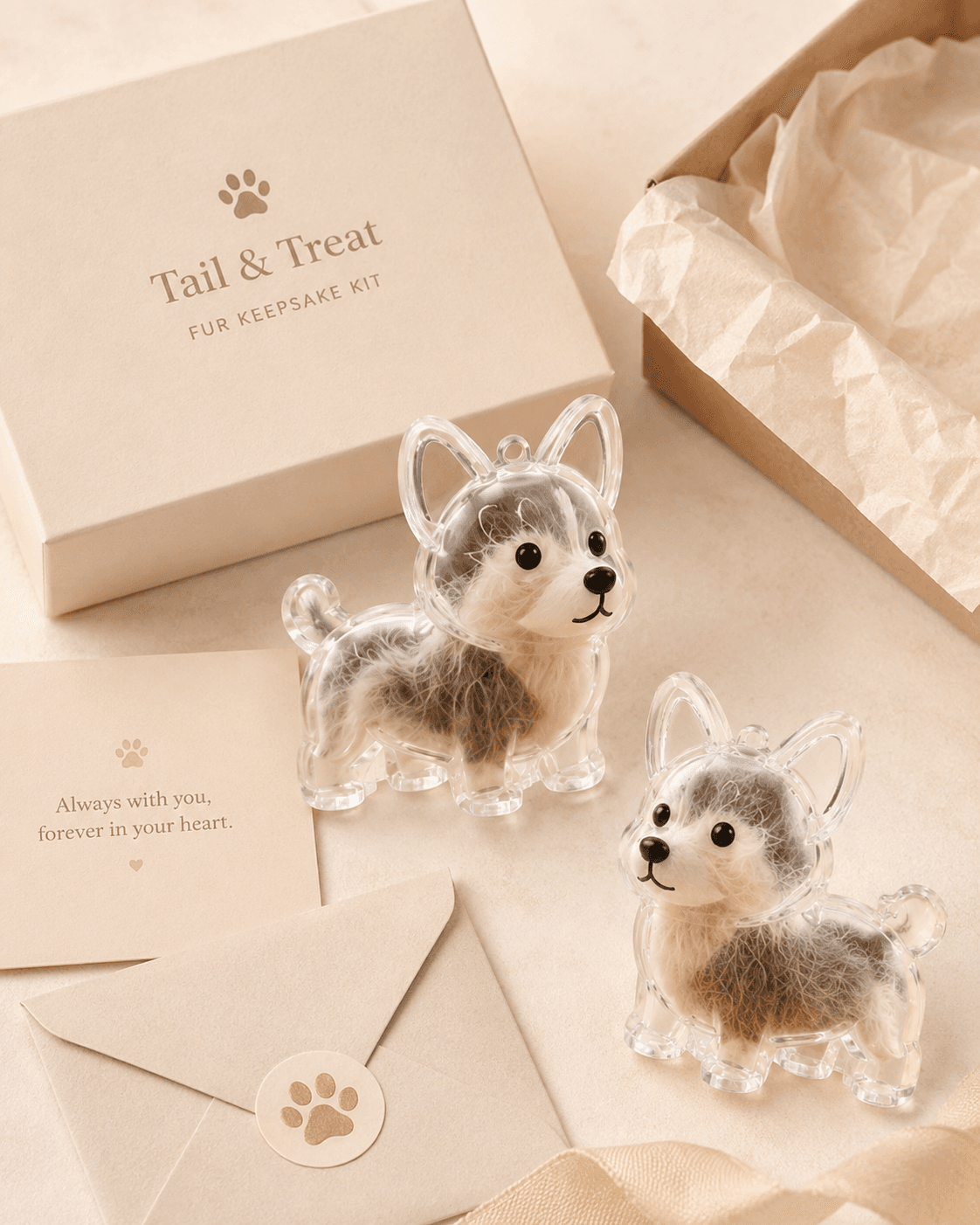
- A keepsake chosen with them. A tag holder, ornament, keychain, or small fur keepsake may fit when the recipient wants something tangible. Ask before selecting a deeply personal format.
When a fur keepsake may fit
A fur-based keepsake is not a neutral surprise. The person may not have fur available, may already have plans for it, or may simply prefer a photograph or written memory. Ask before requesting or handling anything personal.
If they choose this format, the Fur Keepsake Keychain is an at-home kit with a keepsake keychain, collection guide, memory card, and instructions. It uses a small pinch of clean, dry fur and does not require mailing it anywhere. Read what to do with a small lock of dog fur before deciding.
What to write in the card
Keep the message direct and personal. You can adapt one of these starting points:
- “I'm so sorry. I will always remember the way [dog's name] greeted everyone at the door.”
- “[Dog's name] was deeply loved. I'm thinking of you and I'm here if you want company.”
- “I found this photo from our walk together and wanted you to have it. There is no need to reply.”
Avoid minimizing the relationship or setting a timetable. The American Veterinary Medical Association's pet-loss resource notes that dismissive “just a dog” language can leave grieving owners feeling misunderstood.
Support can be practical, too
A meal, an errand, help putting away pet supplies, or a quiet walk may be more useful than an object. Offer one specific action and make it easy to decline.
If the person wants additional support, the Ohio State Honoring the Bond program and Cornell's pet-loss resources provide grief information and links to support options.