

How often should you use a lick mat for your dog?
There is no single correct schedule. A lick mat works best as a measured, supervised food activity that fits your dog's daily routine, food plan, and ability to use the mat safely.
By Tail & Treat Editorial Team · Published Aug 9, 2026 · Updated Aug 9, 2026
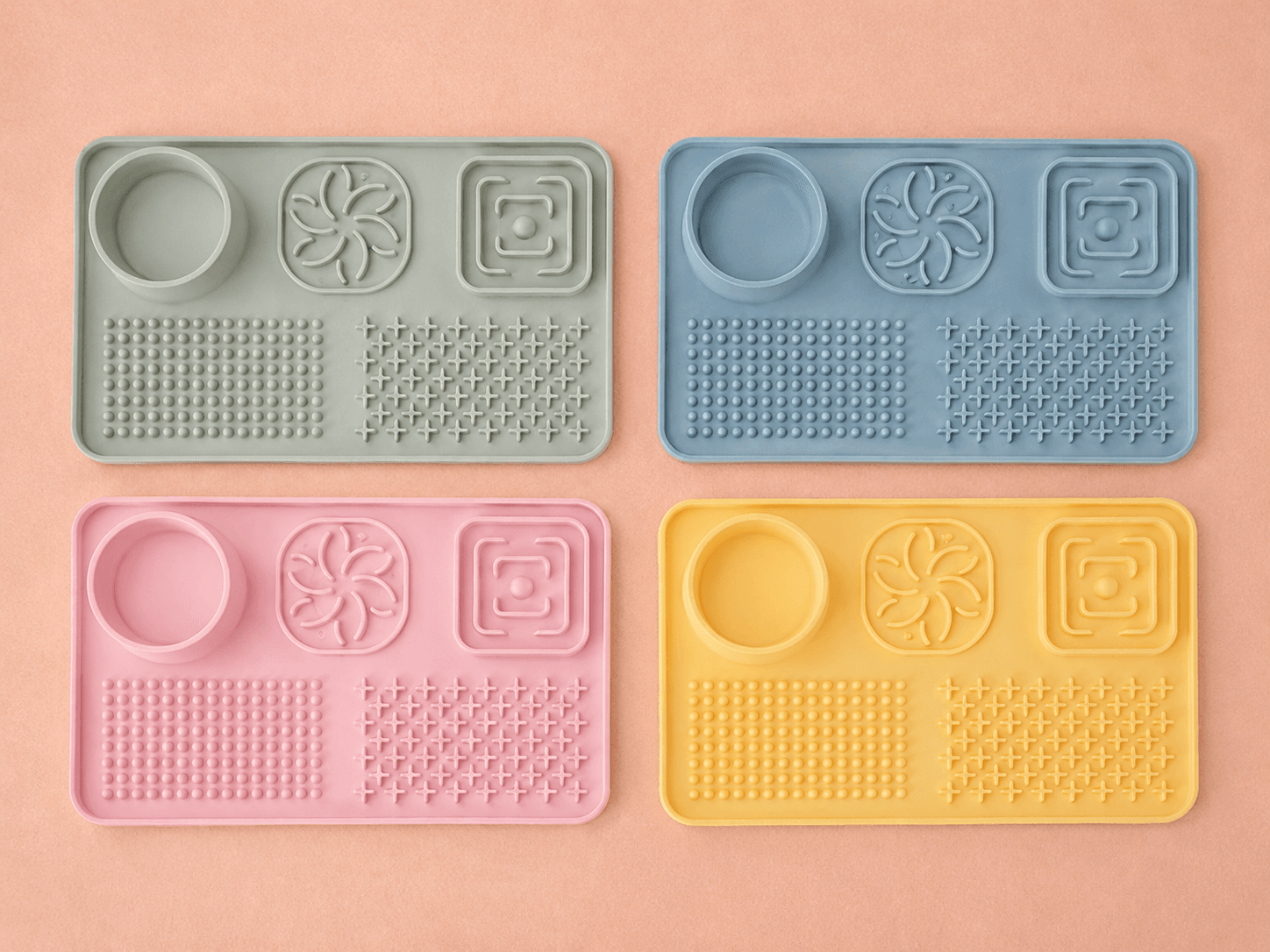
What is a lick mat?
A lick mat is a textured surface designed to hold a thin layer of soft or moist food. Licking gives some dogs a focused food activity without requiring the movement or manipulation of a rolling toy.
Veterinary guidance describes food toys and foraging activities as one form of enrichment. The American Animal Hospital Association's enrichment guidance recommends using food enrichment in moderation and choosing activities that suit the individual dog.
How often should a dog use one?
Think about portion and context rather than a fixed number of times per week. A dog may use a lick mat often when it contains part of their regular meal, while a richer treat-based version may belong less often in the routine. The right amount depends on your dog's size, health, food plan, and the ingredients you use.
Start with a small amount and watch what happens. If your dog settles into the activity, finishes comfortably, and does not try to chew the mat, you can decide whether it fits a repeatable moment such as breakfast, quiet time, or a prepared departure routine.
The VCA's guidance on dog treats and enrichment recommends using part of a dog's regular food when possible and accounting for extras in the daily food plan.
A simple way to introduce a lick mat
- Choose a quiet place and test the mat while you are present.
- Use a thin layer of dog-safe food that fits your dog's normal food plan.
- Let your dog investigate without forcing their face toward the mat.
- Remove the mat when the food is gone or if your dog starts chewing the material.
- Wash and inspect it before using it again.
Keep the first session easy. A dog who becomes frustrated or ignores the mat may need a simpler setup, a different texture, or another kind of enrichment. Food-based activities are optional; they are not a requirement for a healthy routine.
When to pause or ask for advice
- Stop if your dog chews pieces from the mat, becomes frustrated, or shows signs of discomfort.
- Check ingredients and portions with your veterinarian if your dog has allergies, dietary restrictions, or a condition affected by food.
- Do not use a lick mat to force food into a dog who is distressed or refusing food.
- Sudden changes in appetite, repeated vomiting, pain, self-injury, or severe behavior concerns deserve veterinary advice.
Where it can fit in a daily routine
A lick mat can be one small anchor inside a larger plan: part of breakfast, a quiet transition before a busy period, or a supervised wind-down activity. It should sit alongside toileting, movement, social contact, rest, and other enrichment rather than replacing them.
Use the Tail & Treat Routine Planner to map the whole day and select the moment that needs more structure. For dogs who show distress when left alone, read our guide to separation-related distress before treating a food activity as a solution.
Frequently asked questions
Can my dog use a lick mat every day?
Some dogs can use a lick mat regularly when the food portion fits their daily diet and the mat remains safe for them. There is no universal schedule. Start with a small, measured amount and adjust based on your dog, their food plan, and their response.
How long should a dog use a lick mat?
The useful length varies with the food, texture, portion, and dog. The goal is a calm, supervised activity, not a contest to make it last as long as possible. Remove the mat when the food is gone or if your dog starts chewing it.
Can a lick mat help separation anxiety?
A lick mat can be one predictable activity for a dog who safely engages with food, but it does not diagnose, treat, or replace professional support for separation-related distress. Dogs in substantial distress may not eat when left alone.
Sources and further reading
Educational information only. This guide does not diagnose or treat medical or behavioral conditions. Speak with a veterinarian about food safety, dietary needs, or persistent, severe, sudden, or unsafe behavior.