

Rainy-day activities for dogs you can do indoors
An indoor day does not need a packed schedule. Choose one activity your dog already understands, make space for it, and leave time for ordinary meals, toileting, companionship, and rest. Indoor games offer choices when the weather interrupts your plans; they do not replace every dog's outdoor needs.
By Tail & Treat Editorial Team · Published Nov 3, 2026 · Updated Nov 3, 2026
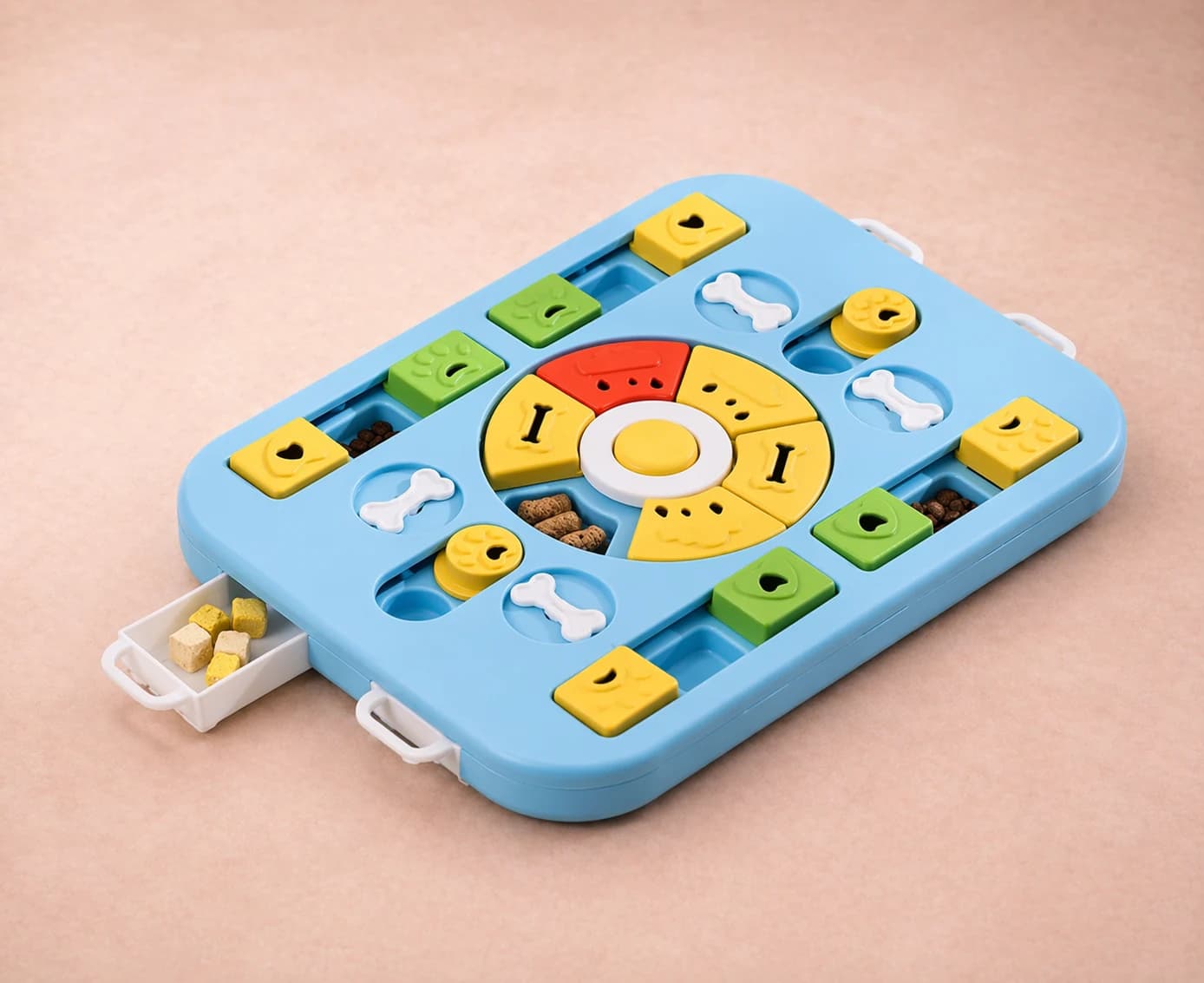
Choose the activity before choosing the equipment
Look at the room you have and what your dog enjoys. A clear patch of nonslip floor suits a stationary food puzzle. A dog who brings you a toy may prefer a brief game together. A dog already sleeping comfortably does not need to be woken for enrichment.
AAHA's indoor enrichment guidance (opens in a new tab) offers scent games and a variety of activities. Treat those as options, not a daily quota. The suggestions below are practical setups, not tested prescriptions for minutes of exercise or guaranteed behavior change.
Try an easy food search
Use food already appropriate for your dog's diet, and reserve a few pieces from their usual allowance. VCA's food-enrichment guidance (opens in a new tab) recommends accounting for food used in activities rather than adding it without a plan. With your dog watching, place them in plain sight on an accessible, clean surface. Let your dog investigate. If that is comfortable, try a slightly less obvious position in the same clear area.
Keep food away from furniture gaps, electrical cables, stairs, and places that invite climbing. Skip this activity if food on the floor creates conflict between animals; give each dog their own supervised activity space. Collect leftover pieces afterward. You do not need to buy anything for this game.
Offer a puzzle with an obvious first reward
Start with one easy-to-reach portion rather than filling every compartment. Watch whether your dog finds the food or starts biting the object. Ohio State's puzzle-toy handout (opens in a new tab) emphasizes supervision, appropriate difficulty, and watching for damage or ingestion.
Our puzzle introduction guide explains the first session. A reusable food puzzle is optional; an easy food search may already do the job.
Choose a food-free game together
Bring out a familiar toy and invite your dog to approach. Carrying a toy between two nearby people or practicing a familiar reward-based cue can be enough. Avoid turning a small room into a sprint course.
For dogs already comfortable with tug, follow the safe tug guide. Put damaged rope away. If your dog guards toys, stop and seek professional advice rather than trying to take the toy by force.
Let the day include quiet time
After an activity, clear the floor and leave water and a familiar resting place available. The RSPCA recommends an undisturbed resting area (opens in a new tab). Notice whether your dog seeks company, chooses another surface, or rests. You are observing preference, not testing whether a product “worked.”
Use the daily routine guide when you need to fit activities around work and toileting. Change one part of the day at a time so it stays manageable.
Stop when the activity no longer fits
Pause for damaged materials, attempts to swallow pieces, guarding, discomfort, or repeated avoidance. Ask your veterinarian about new pain, appetite changes, or activities for a dog with health or mobility restrictions. Do not use indoor enrichment as treatment for separation anxiety.
Product purchases are optional. Estimated delivery is 4–6 weeks; use suitable items you already have for today's activities.