

How to measure your dog for a bed
Weight can narrow the options, but sleeping position and usable space tell you whether a bed gives your dog room to rest naturally.
By Tail & Treat Editorial Team · Published Sep 18, 2026 · Updated Sep 18, 2026
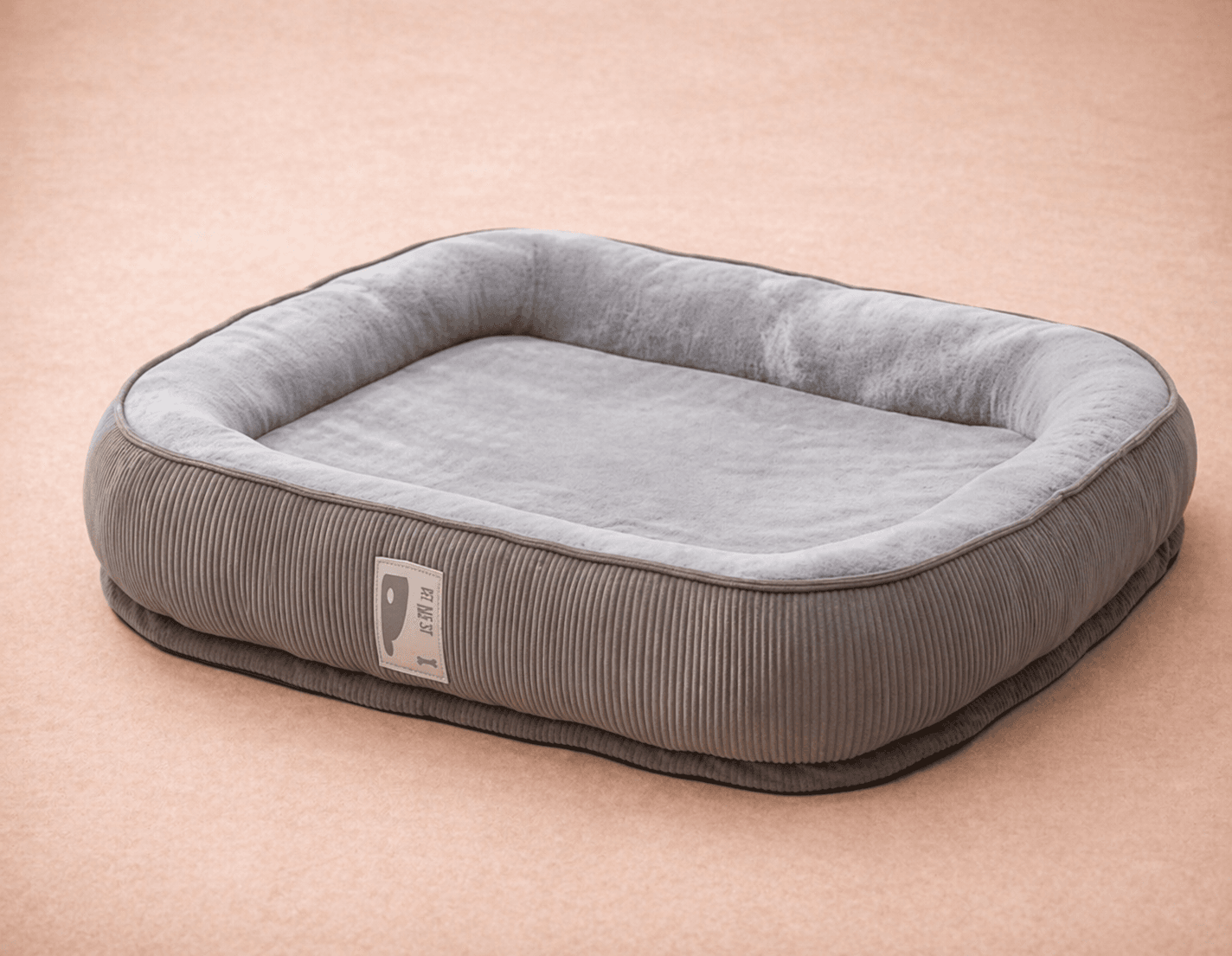
Measure the position your dog actually uses
Watch several naps before measuring. Some dogs curl most of the time, while others stretch on one side, lie on their back, or change positions repeatedly.
The RSPCA dog-bed guide recommends enough room for dogs to lie comfortably in their natural positions, including stretching out rather than only curling up.
A simple measurement process
- Wait until your dog is resting in their longest common position.
- Measure from the front of the body to the farthest resting point at the back.
- Measure the widest part of the position, including naturally extended legs.
- Write down whether the dog also curls, uses an edge as a headrest, or changes position.
- Compare those observations with the bed's usable sleeping area and entry height.
Do not pull the dog into a longer position or wake them to make the measurement. An approximate observation across several rests is more useful than one forced pose.
Outside dimensions and usable dimensions are different
A bolster, wall, or thick edge takes up part of the listed footprint. A bed can fit the room while providing less internal sleeping space than expected.
When a seller lists only one length and width, confirm whether those numbers describe the full outside footprint or the usable sleeping surface. Until that is confirmed, treat the measurements as a comparison tool rather than an exact promise about internal space.
Use weight guidance as a second check
Two dogs at the same weight may have different body lengths, leg lengths, and resting positions. Start with the dog's measurements, then use a supplier weight range as a secondary check.
The Welsh Government's dog welfare code says a sleeping area should be large enough for a dog to stretch and lie flat, walk and turn around, and move without touching the sides.
Check the room and access
Measure the available floor space before ordering. Leave a clear route into and out of the bed, and avoid placing it where it blocks a door, walkway, heater, or household exit.
Also consider entry height. A tall edge may not suit a dog with reduced mobility. RSPCA safe-space guidance recommends a calm, draught-free area that a dog can enter and leave freely.
Corduroy Bolster Lounge Bed sizes
These are the current supplier-listed dimensions and weight guides used on the Corduroy Bolster Lounge Bed page. We are confirming whether the measurements describe the outside footprint or usable sleeping area.
| Size | Listed dimensions and weight guide | Current price |
|---|---|---|
| M | 20 × 16 in — up to 5.5 lb | $54.99 |
| L | 24 × 20 in — up to 16.5 lb | $57.99 |
| XL | 30 × 24 in — up to 33 lb | $60.99 |
| 2XL | 35 × 30 in — up to 55 lb | $63.99 |
Measure your dog and intended floor space before using the weight guide. Contact support@tailandtreat.com if you need help comparing the listed options.
Observe the fit after setup
After the bed is available, watch whether your dog can enter, turn, stretch, and leave without difficulty. Do not force use. The 7-Day Wind-Down Routine Diary can help record voluntary use and other resting locations.
For shape, material, temperature, and placement considerations, continue with How to Choose a Dog Bed or return to the Dog Rest and Wind-Down Guide.
Sources and further reading
Educational information only. Ask a veterinarian for individualized help when pain, injury, pressure sores, weakness, or impaired mobility affects how your dog lies down or gets up.