

Dog rest and wind-down guide
Start with the sequence around rest: a lower-intensity transition, a familiar cue, and an appropriate place your dog can choose to use.
By Tail & Treat Editorial Team · Published Sep 17, 2026 · Updated Sep 17, 2026
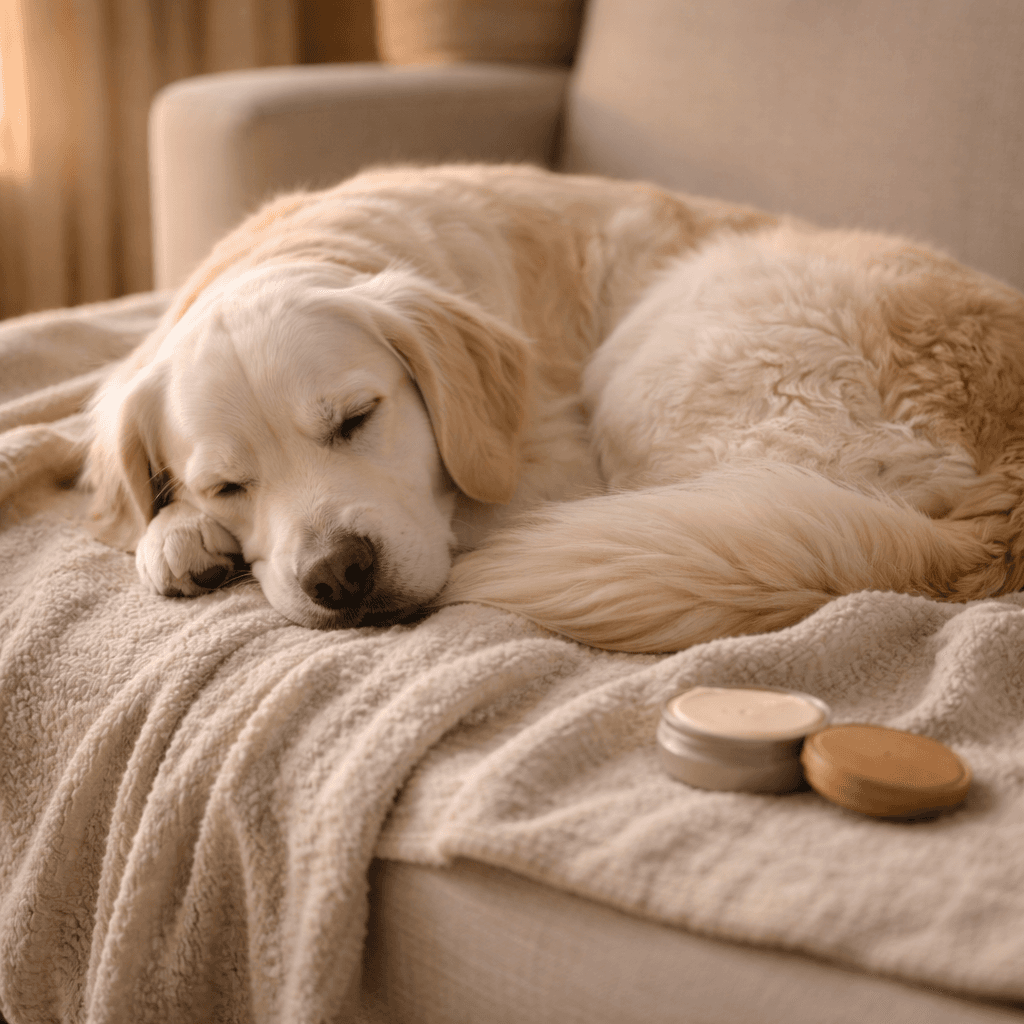
What wind-down means
Wind-down is the part of the day when activity gives way to a quieter period. It is not a promise that a particular cue, toy, or bed will make a dog sleep. It is a practical way to make the transition easier to recognize and repeat.
Your version may happen after a final walk, after dinner, when work ends, or when the household becomes quieter. Keep the structure flexible enough to fit toileting, feeding, exercise, medication, age, and veterinary guidance.
Begin with sleep and individual variation
VCA Animal Hospitals notes that adult dogs commonly sleep at least half of a 24-hour day, with 10 to 14 hours falling within normal variation for many dogs. Puppies often sleep much more between short active periods.
Those figures are context, not a schedule to enforce. Watch your dog's usual pattern and speak with a veterinarian about a marked change in sleep, nighttime restlessness, breathing, appetite, toileting, play interest, or energy.
Read the dog sleep guideA simple evening sequence
- Finish the day's suitable movement, play, or training.
- Meet normal meal, water, medication, and toileting needs.
- Shift the household toward lower-intensity interaction.
- Use one familiar cue that naturally fits your home.
- Make a suitable resting area available without forcing its use.
The useful part is repeatability, not perfect timing. The Daily Dog Routine Planner helps place the evening stage around an office, hybrid, or changing schedule.
Create an appropriate resting area
The RSPCA recommends a comfortable, dry, draught-free, clean, and quiet place where a dog can rest undisturbed. A bed can be part of that area, but location and household behavior matter too.
Give your dog a choice when possible. One location may be quiet and private, while another lets the dog rest near the family. Make sure children and visitors understand that a resting dog should not be disturbed.
Choose the surface and location together
Observe whether your dog curls, stretches, changes position, seeks a raised edge, avoids enclosed spaces, or moves between warm and cool surfaces. The RSPCA dog-bed guide recommends enough room for natural sleeping positions and a washable material suited to how the bed will be used.
Before buying, measure the area your dog actually uses when lying down and check both external and usable sleeping dimensions. Dogs with pain, reduced mobility, or a sudden change in resting behavior need individualized veterinary advice.
Sources and further reading
Educational information only. A major change in sleep, mobility, breathing, behavior, appetite, or toileting can have a medical cause and should be discussed with a veterinarian.
Build the resting part of the routine one decision at a time.
How much sleep do dogs need?
Understand normal variation, daytime naps, life stages, and when a change is worth discussing with a veterinarian.
Read guideBuild an evening routine
Create a repeatable transition from activity and household time to a quieter resting period.
Read guideChoose a dog bed
Compare sleeping position, size, entry height, material, temperature, and cleaning needs.
Read guideChoose the resting location
Use your dog's existing preferences, household traffic, temperature, and need for company as practical clues.
Read guide